
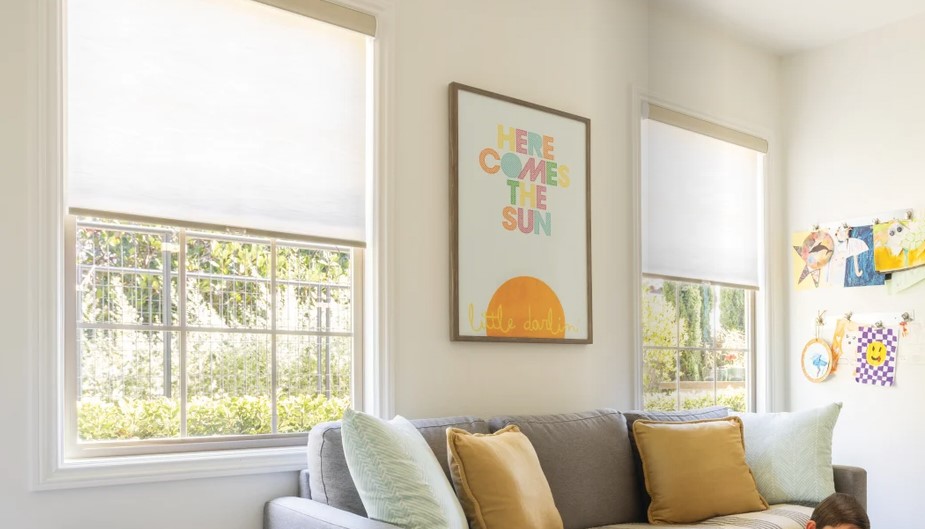
Accurately measuring your windows is the single most important step when ordering custom bottom-up shades for your home. Taking precise dimensions ensures your window treatments operate smoothly, fit snugly, and provide optimal light control and privacy.
Rushing through the measurement process often leads to unsightly light gaps, binding fabrics, or shades that fail to operate correctly. Investing a few careful minutes in proper measuring saves time, eliminates hassle, and guarantees a flawless final installation.
Selecting Between Inside Mount and Outside Mount Installations
Before picking up a tape measure, you must determine whether your bottom-up shades will sit inside the window frame or mount on the surrounding wall. Choosing the right mounting style dictates how and where you measure your window opening.
- Inside mounts fit neatly within the window casing to showcase architectural trim and create a clean, minimalist appearance.
- Outside mounts attach to the wall or wood trim outside the window frame, making windows appear larger and blocking light leaks completely.
- Inside mounting requires a minimum window frame depth to ensure mounting brackets sit flush without protruding into the room.
Deciding on your preferred mounting style upfront establishes the exact boundaries required for taking precise, accurate measurements.
Measuring Window Width at Three Critical Points
Window openings are rarely perfectly square, so taking multiple width measurements across the frame is essential for a precise fit. Recording variations in width prevents your custom shade from binding or leaving uneven gaps along the sides.
- Measure the exact horizontal distance across the top, middle, and bottom sections of the window casing.
- Use a steel tape measure rather than a flexible fabric tape to guarantee completely rigid and accurate dimensional readings.
- Record all measurements to the nearest eighth of an inch without rounding up or down to avoid sizing discrepancies.
For inside mounts, always use the smallest width measurement taken so the bottom-up shade moves freely within the frame without catching on the sides.
Measuring Window Height at Three Strategic Locations
Determining the precise vertical drop ensures your bottom-up shade extends fully to the sill and lowers neatly when opened. Measuring height accurately is crucial for bottom-up mechanisms to maintain proper cord tension and smooth operational movement.
- Measure the vertical distance from the top inner casing down to the sill on the left side, center, and right side.
- Note any window frame sagging or uneven sills that could cause the shade fabric to sit crooked when fully raised.
- Keep the tape measure completely straight and vertical while recording each measurement to maintain precision.
For inside mounts, use the longest height measurement so the shade covers the full length of the glass when extended to the top.
Checking Window Depth and Architectural Obstructions
Window depth determines whether your frame can accommodate the shade’s mounting brackets and operating hardware without obstruction. Evaluating interior frame space prevents installation surprises and ensures smooth shade movement.
- Measure the clear, unobstructed depth from the front face of the window frame back to the glass pane.
- Account for handles, cranks, alarm sensors, or window locks that project forward into the mounting space.
- Verify that your frame depth meets the manufacturer's required minimum clearance for full bracket installation.
Identifying internal frame obstructions early allows you to adjust bracket positioning or switch to an outside mount before ordering your shades.
Recording Final Dimensions and Double-Checking Measurements
Taking your time to review every recorded dimension prevents costly ordering errors and ensures complete confidence in your measurements. Following a systematic process eliminates mistakes and guarantees a smooth ordering experience.
- Write down width dimensions first, followed by height dimensions, to follow standard industry formatting consistently.
- Measure every single window independently, even if windows in the same room appear identical at first glance.
- Re-measure every dimension a second time to verify accuracy before submitting your final specifications for production.
Double-checking your numbers gives you peace of mind that your new custom shades will fit perfectly right out of the box.
Guarantee a Perfect Custom Fit for Your Home
Taking accurate window measurements is the foundation of a beautiful, highly functional shade installation. Following a careful step-by-step approach ensures your custom bottom-up shades deliver exceptional light control, privacy, and long-lasting performance.
Transform your living space with confidence by taking precise window measurements today. Investing attention in proper measuring guarantees a seamless installation process and a polished, professional finish across every room in your home.